Dignity First
Every design decision begins with the question: does this protect and enhance human dignity?

sanloop builds circular sanitation that women own. We transform waste into resource—and exclusion into dignity.
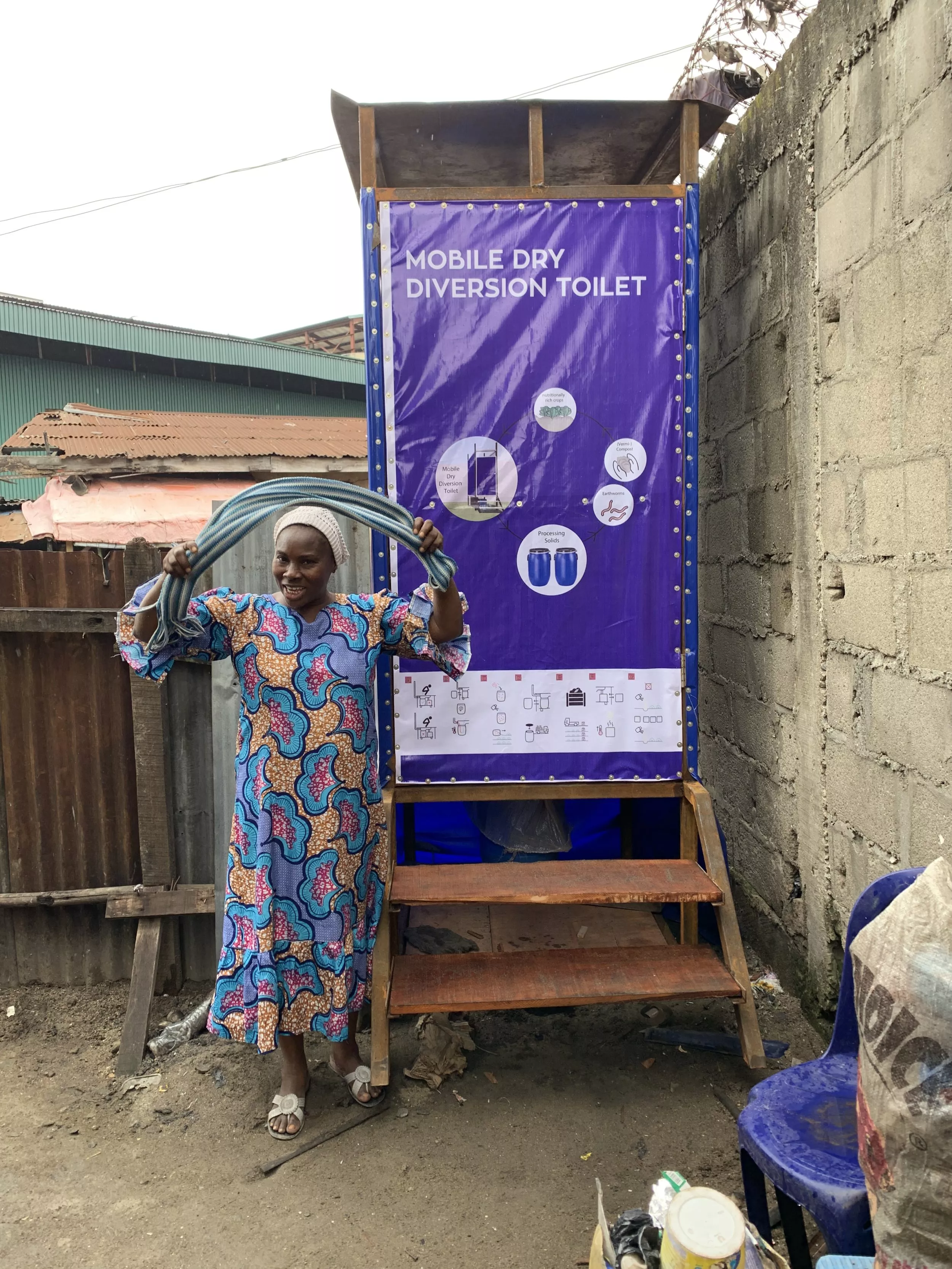
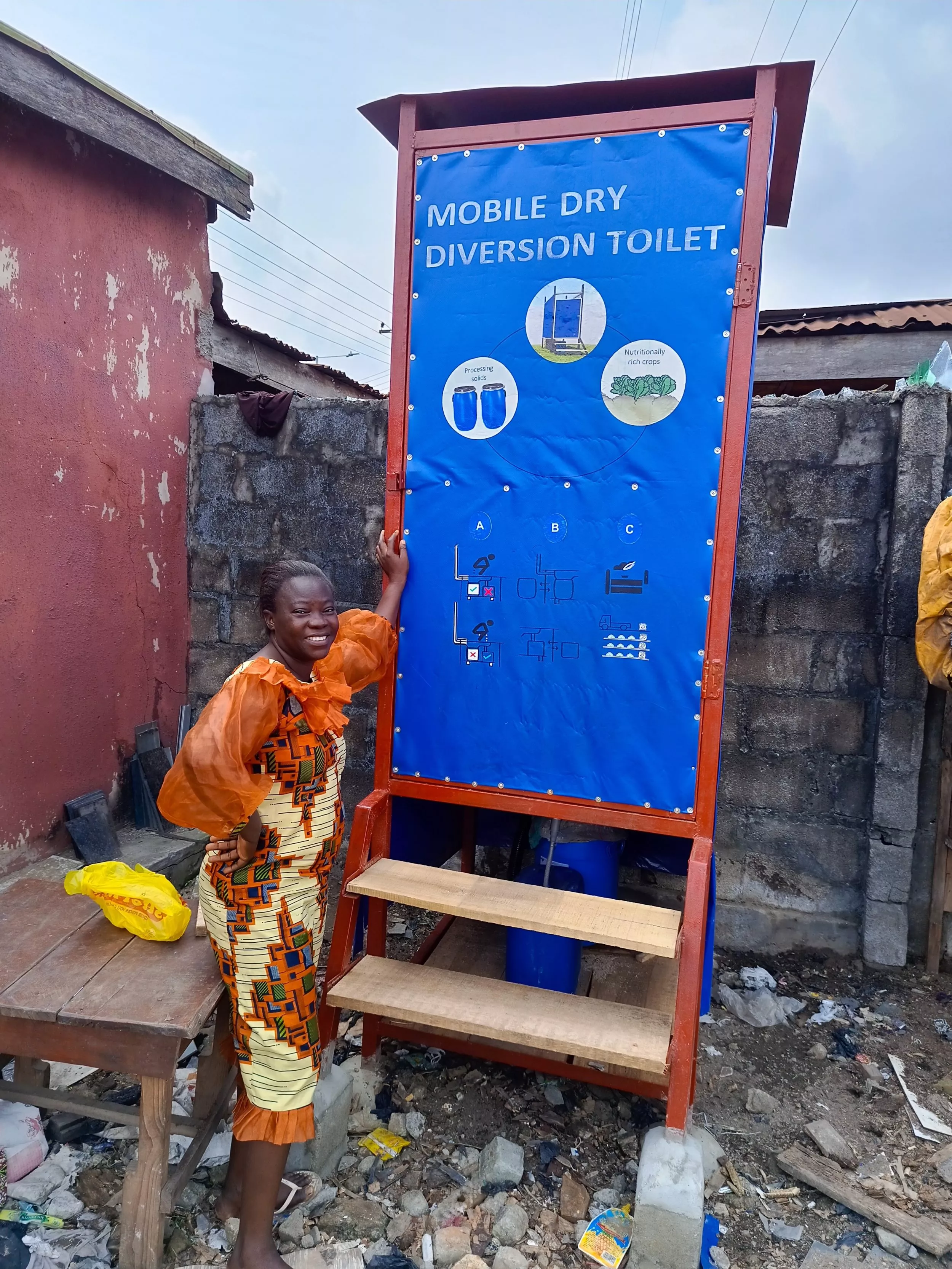
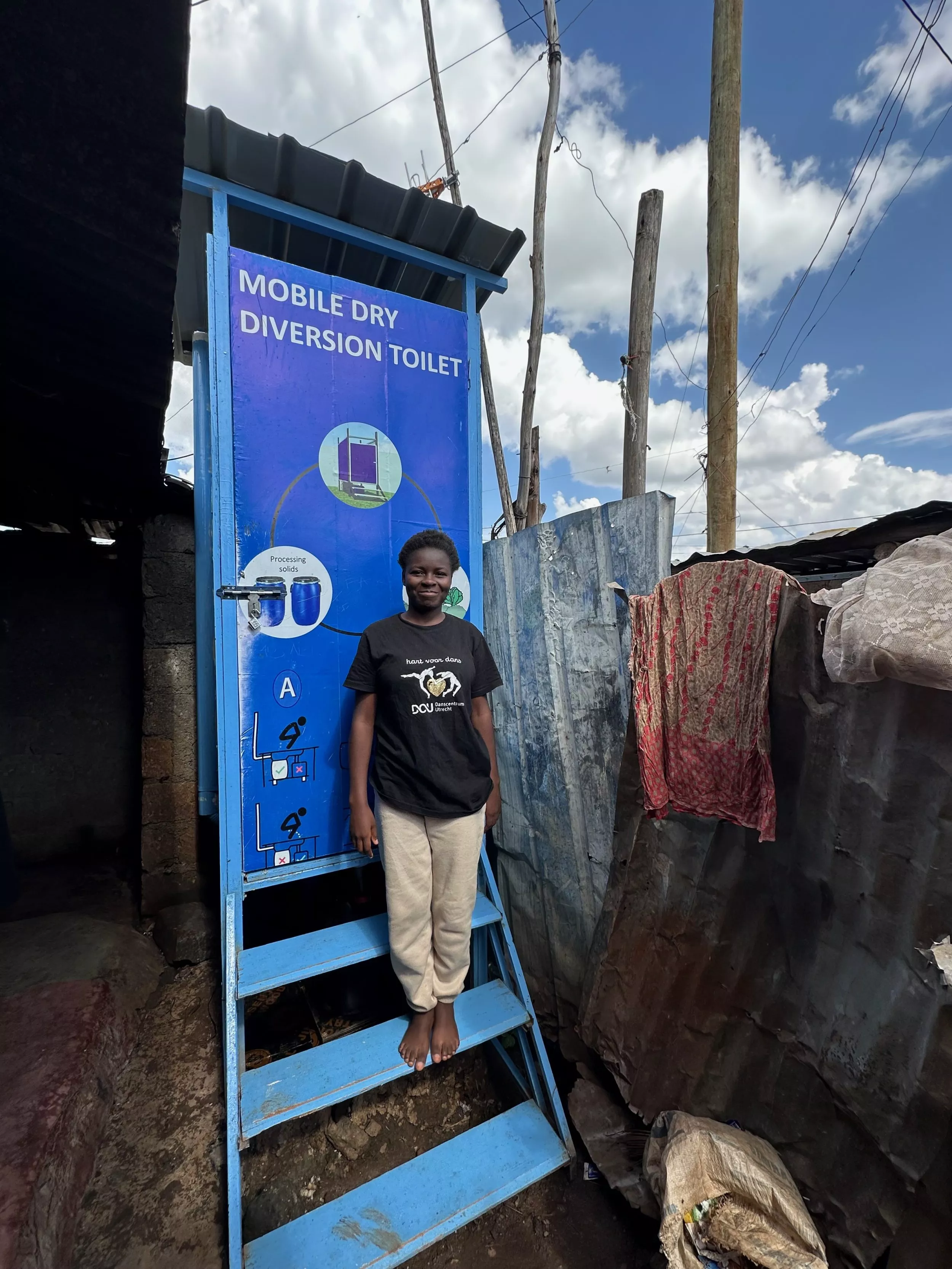
3.6 billion people—half of humanity—live without safely managed sanitation. For women in informal settlements, this is not merely inconvenient; it is dangerous. When there is no toilet, women must walk to the bush at night—where they are vulnerable to harassment, assault, and rape. Where sanitation is absent, women pay in safety—the walk to the bush at night exposes them to harassment, assault, and rape. That absence is not neutral; it is a condition of gendered violence.
Before, I was ashamed. Now women come to me to learn.
Finally, a toilet of my own—safe, and I can lock it.
A world where the infrastructure of dignity is circular, woman-owned, and independent of whether a sewer ever arrives.
The Mobile Dry Diversion Toilet (MDDT) is a waterless toilet that separates urine from feces and dries both rather than composting them. It needs no water, no sewage connection, and no power. The feces are dried into a small, stabilized residue; the urine is filtered and left to evaporate in the sun, leaving a dry, sand-like mineral residue. Both become fertilizer for local farmers—and where it’s sold to them, the income goes to the woman who owns the toilet. Affordable to produce and locally maintainable, the MDDT is built to be owned and run by women, not simply used by them.
Waterless
No connection to water supply or sewage required
Circular
Human waste becomes agricultural compost
Women-owned
She owns the unit—her name is on it
Scalable
Replicable across contexts without centralized infrastructure
Dignified
Private, safe, lockable, clean
Women reached through Dignity Circles
Women for MDDT, each name inscribed on her unit
Ambassadors leading Dignity Circles
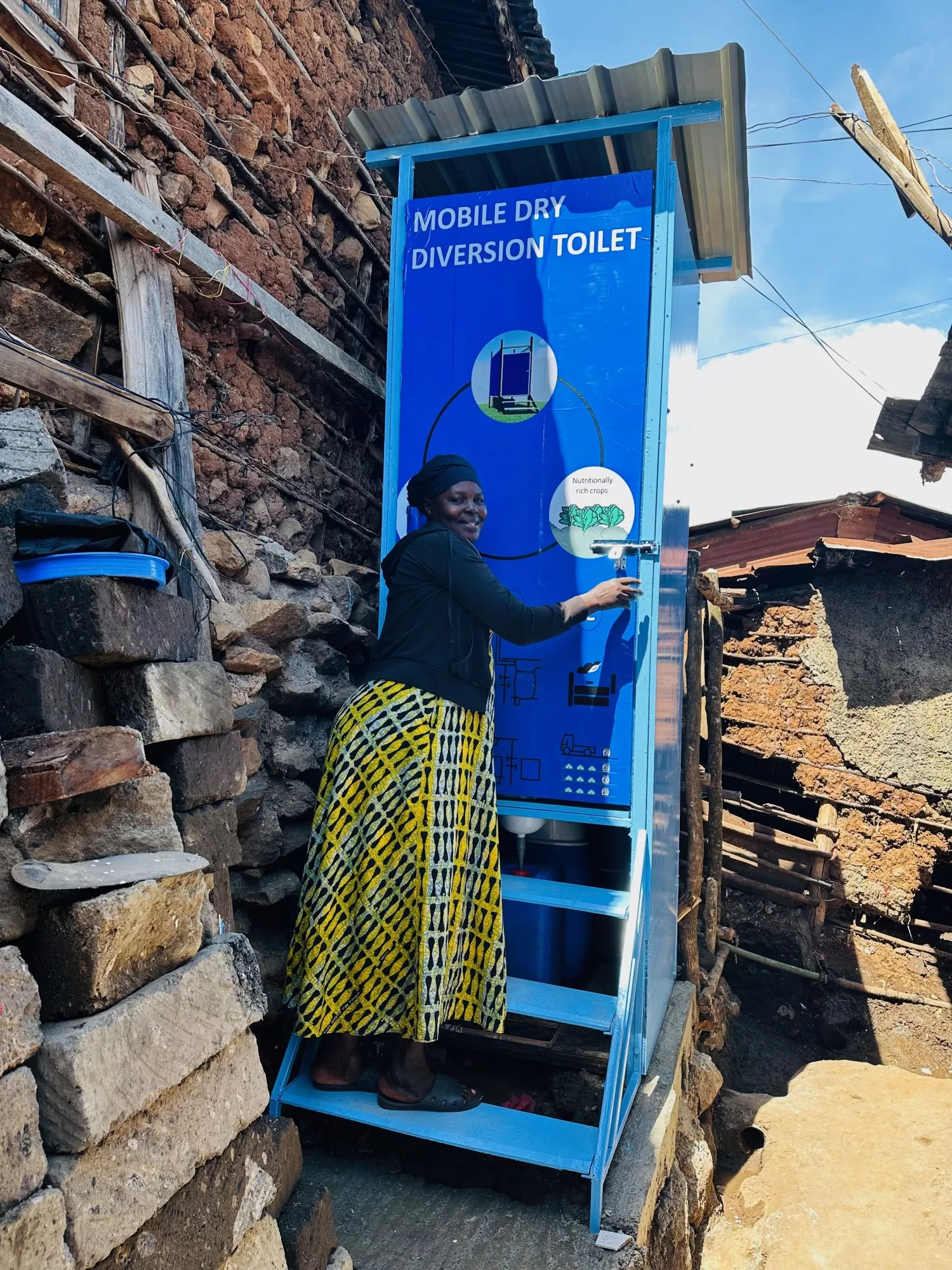
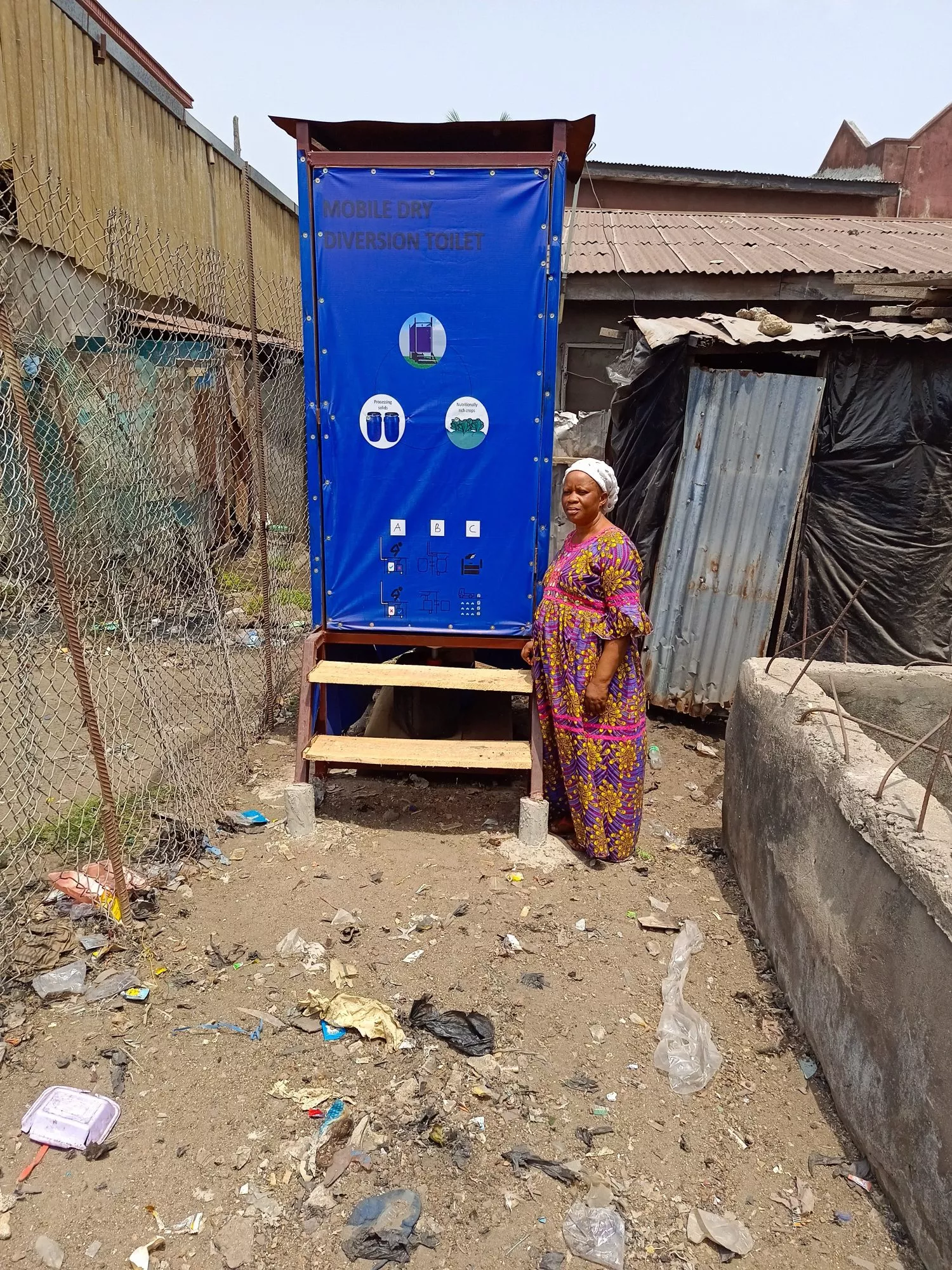
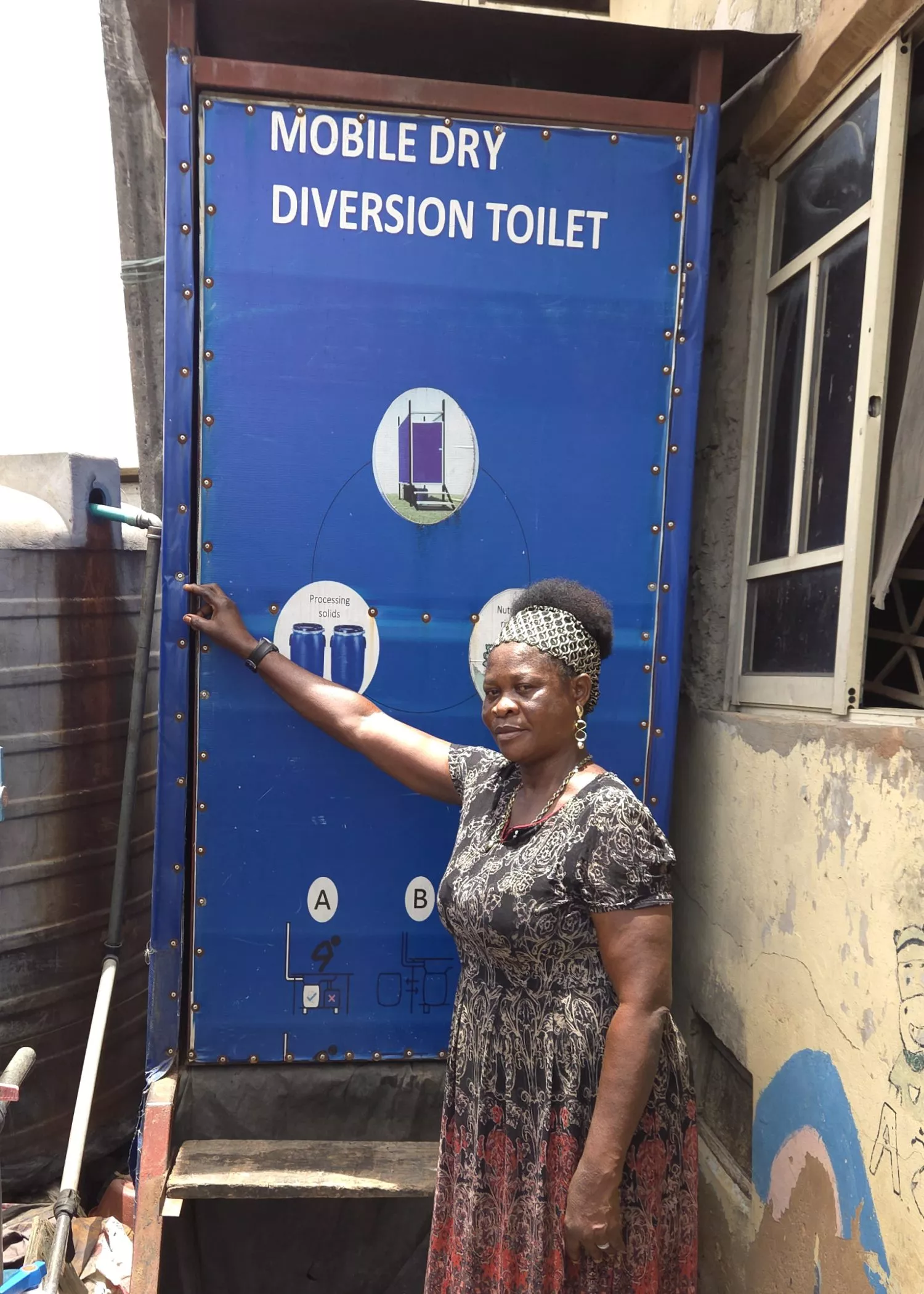
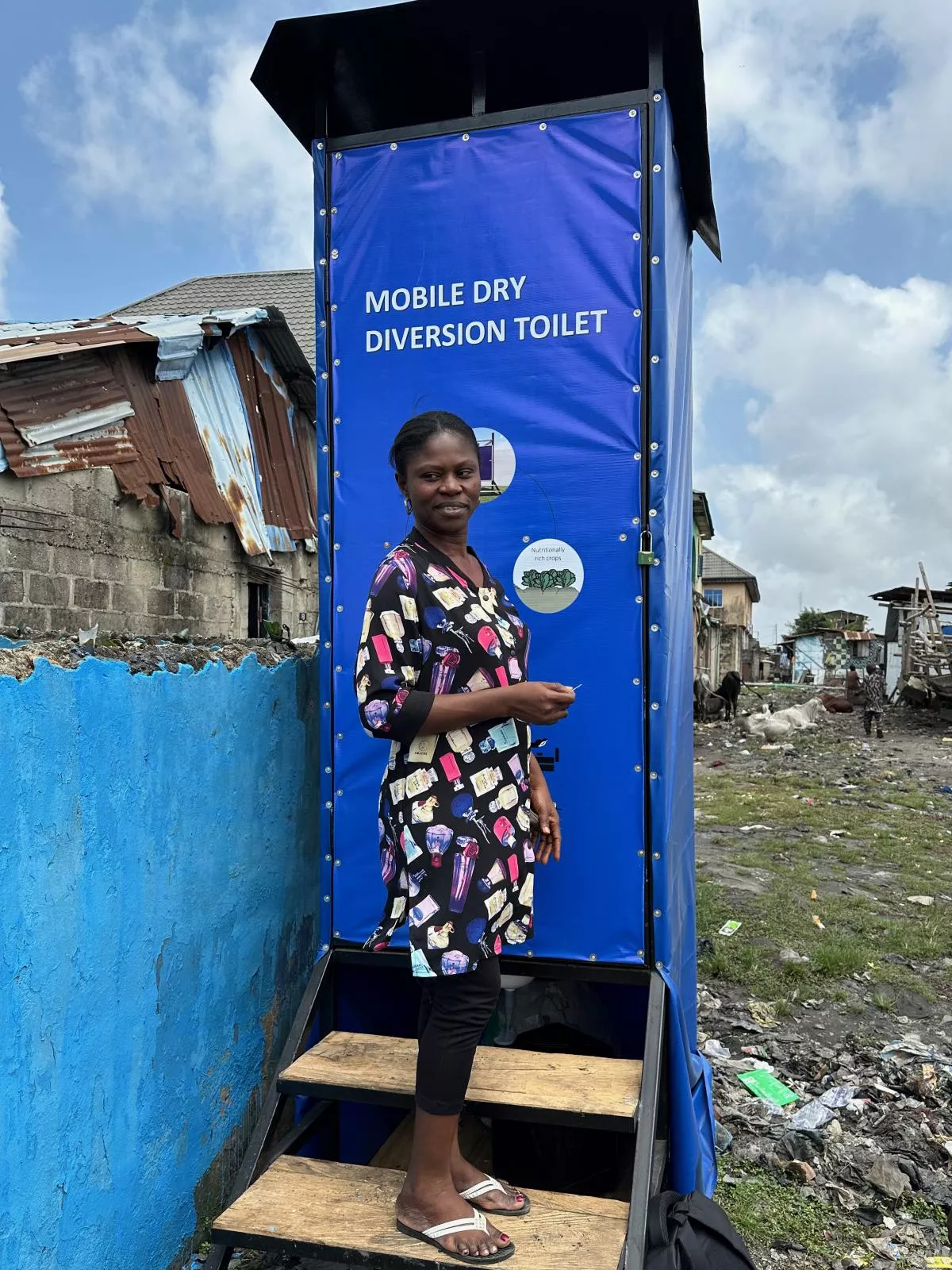
sanloop develops and deploys circular sanitation systems for neighborhoods without access to conventional infrastructure. The Mobile Dry Diversion Toilet (MDDT) gives a woman a private, lockable toilet of her own—no walk to the bush, no waiting, no shame. It needs no water and no sewage connection, so it works where conventional infrastructure never will. It separates urine from feces and dries both into fertilizer for local farmers. She owns it. She runs it. When the fertilizer sells, the income is hers. What she learns, she passes on.
Dignity Circle (entry point—capacity, peer education, led by an Ambassador)
Ownership (she acquires her MDDT; her name is inscribed)
Women for MDDT (every named unit is membership made material)
Ambassador (she leads a circle of her own and recruits across communities).
Every design decision begins with the question: does this protect and enhance human dignity?
Waste is resource. Our systems close the loop, returning nutrients to the soil.
We don’t deliver toilets to women—women own them. Documented cases of women denied ownership of their units are why this is non-negotiable.
Infrastructure is not a product but a system—technical, social, economic, environmental.
sanloop is a Swiss nonprofit founded by Fabienne Hoelzel, a feminist urbanist with fifteen years of experience building infrastructure in São Paulo, Lagos, and Nairobi. Based in Aarau, sanloop operates in Nigeria and Kenya, with plans to expand across sub-Saharan Africa.
sanloop has the production capacity and supply chain to deploy 50 MDDT household toilets immediately upon funding confirmation. There is no lead time between your gift and implementation. Our 2026 campaign goal is CHF 100,000—covering 50 units across Lagos, Enugu-Emene, and Nairobi, plus the Solar Drying Facility and Urine-to-Fertilizer Plant in Enugu-Emene. Campaign operations are funded by Heinrich Böll Foundation Abuja. Swiss donations fund unit production, installation, and Women for MDDT Network support.
sanloop works with institutional funders, government partners, and co-implementers—local community associations, WASH-focused NGOs, development agencies and programs—who share our commitment to dignity-centered, woman-owned sanitation infrastructure. If you are exploring how to support or scale circular sanitation in sub-Saharan Africa, we want to hear from you.